
Community Service Project Road
Building safe access and community connectivity in rural Vietnam.
The Community Service Project Road is an infrastructure-focused service learning program designed for international schools, high schools, universities and educational institutions seeking meaningful, hands-on community engagement in Vietnam.
The project focuses on supporting the construction of a concrete access road in a rural community where families currently depend on dirt pathways for daily movement, especially during the rainy season.
Understanding Rural Access And Everyday Mobility
In many rural communities of Vietnam, daily life depends on small local pathways that connect homes, farms, schools and essential services. These paths may look simple, but they are part of the community’s everyday rhythm.
For families living in agricultural areas, a road is not only for transportation. It helps farmers move rice and produce, allows children to reach school more safely, supports access to repair services and makes emergency movement easier when help is needed.
During the rainy season, dirt paths can become muddy, slippery and unsafe. What may seem like a small road improvement can create a major difference in daily life, helping students understand the connection between infrastructure, climate and community wellbeing.
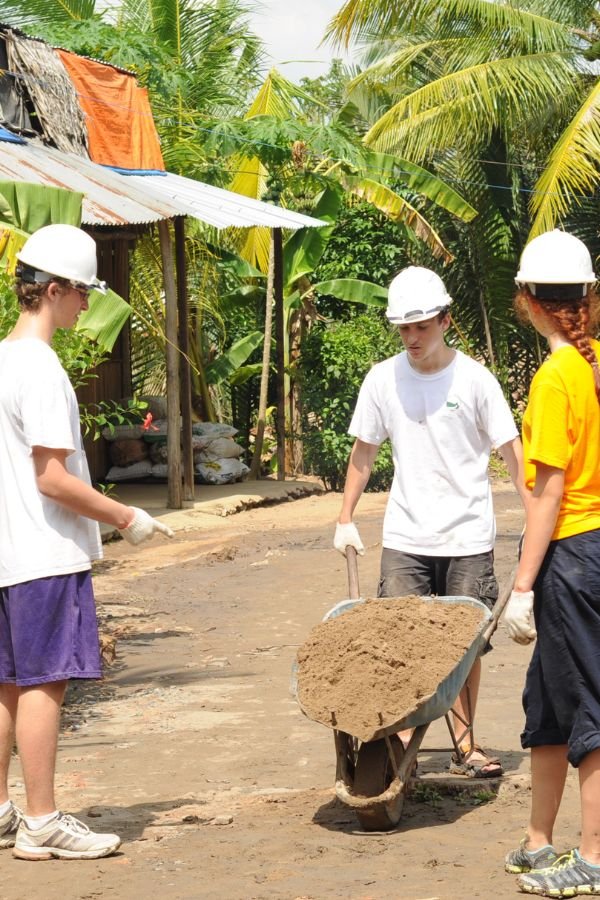
Learning Through Rural Infrastructure And Community Cooperation
Students learn how safe access, road conditions and climate challenges affect education, farming, services and family life.
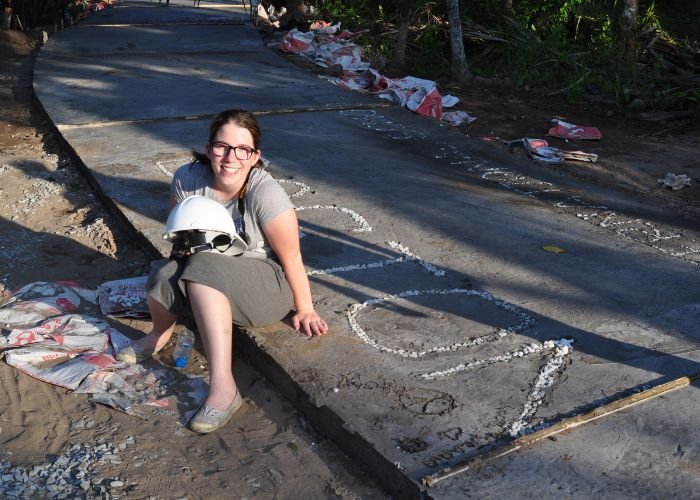
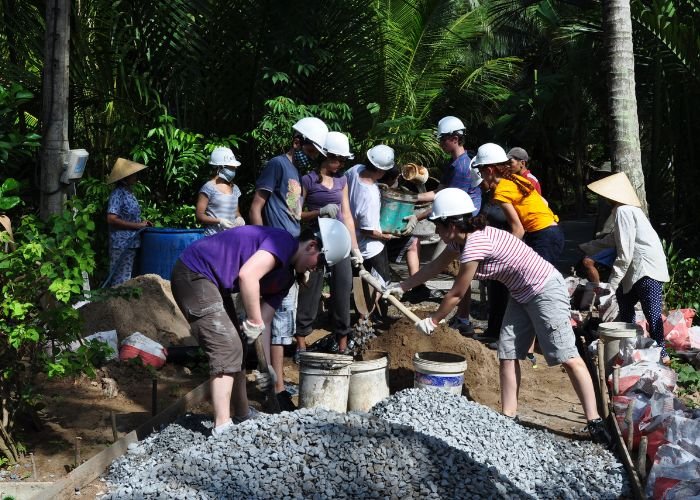
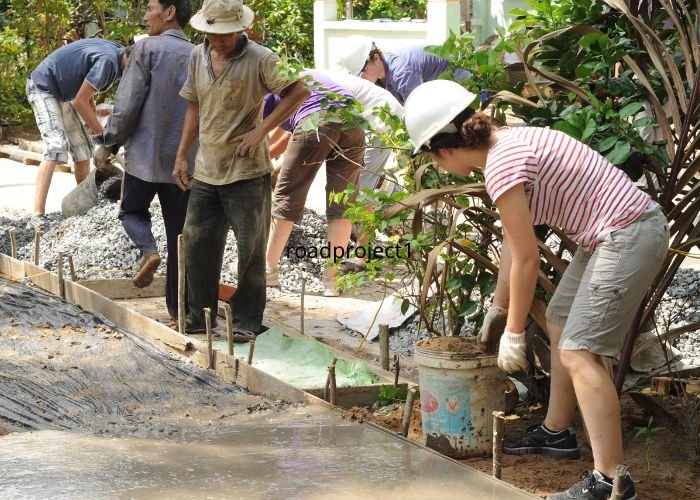
Creating Safer And More Reliable Community Access
The purpose of the Community Service Project Road is to support the construction of a durable cement pathway that improves safe access and daily connectivity for local households. The project may involve a concrete pathway of approximately 200 meters, designed to provide a more reliable route through the community.
The road directly supports households that currently depend on unstable dirt paths for transportation and daily movement. It can reduce travel difficulty, improve access to rice fields, help children reach school more safely and allow goods or services to move more easily.
The goal is not only to build a road. The deeper purpose is to help students understand how basic infrastructure can affect education, agriculture, safety, family life and community resilience.
Why This Matters
A road can change the rhythm of daily life. For local families, a concrete pathway can make it easier to travel during the rainy season, move rice and agricultural goods, reach school, access services and respond to urgent needs.
For children, safer access can reduce travel difficulty and support more consistent school attendance. For farmers, improved road conditions can make daily work more efficient.
For visiting students, this becomes a practical lesson in how infrastructure is connected to mobility, dignity, opportunity and quality of life.
Safe, Supervised And Age-Appropriate Infrastructure Support
Students do not perform hazardous technical road construction. Professional local builders handle all technical work to ensure safety and quality.
Site Preparation
Students may help clear safe work areas along the pathway and prepare simple sections under supervision.
Material Organization
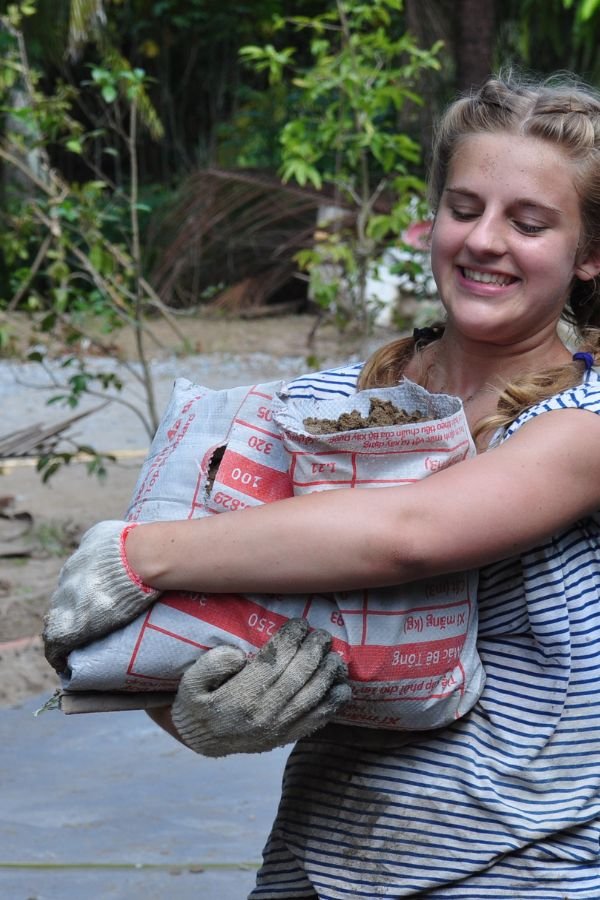
Students may help organize sand, gravel, cement and light materials safely around the project site.
Community Cooperation
Students work alongside local residents in suitable support tasks and learn through shared effort.
Daily Reflection
Students reflect on infrastructure, rural mobility, climate challenges and responsible community service.
Connecting Infrastructure With Education, Livelihoods And Safety
This project helps students understand how basic infrastructure directly affects daily life and community resilience.
Community Development
Students learn how roads support access to farms, schools, homes and essential services.
Climate Awareness
Students understand how rain, mud and limited resources shape daily movement in rural Vietnam.
Teamwork And Problem Solving
Students follow safety guidance, support shared tasks and learn responsibility in a real project setting.
Global Citizenship
Students reflect on equity, infrastructure, privilege, community resilience and respectful service.
Sample 5 Day Project Structure
The project can be delivered as a focused infrastructure service learning program or combined with a broader educational journey in Vietnam.
Day 1: Arrival And Community Introduction
Students travel to the project location, meet local coordinators, community representatives and builders, then receive a cultural briefing, safety orientation and project introduction.
Day 2: Site Preparation And Material Organization
Students help clear safe work areas, organize materials and learn how the road design supports safer access during wet weather.
Day 3: Road Construction Support And Rural Life Learning
Professional builders continue technical construction work while students support suitable non-hazardous tasks and observe how road surfaces are prepared.
Day 4: Continued Support And Community Reflection
Students continue supervised support activities and reflect on rural mobility, climate challenges, community development and shared responsibility.
Day 5: Completion And Closing Reflection
The project concludes with a simple road opening or community sharing moment, followed by reflection on infrastructure, resilience and responsible service.
Who This Project Is Suitable For
- International middle schools
- International high schools
- University service learning groups
- Global citizenship programs
- Community service programs
- Rural development learning programs
- Sustainability and climate awareness programs
- Student leadership groups
Possible Extensions
Schools can extend this project into a broader educational journey in Vietnam, connecting infrastructure, village life, farming communities and cultural learning.
- Mekong Delta village life and agricultural exploration
- River life and rural livelihoods learning
- Climate change and water management study
- Ho Chi Minh City history, museums and urban studies
- Vietnamese culture and local community exchange
- Student leadership and teamwork workshops
- Reflection retreat after the service project
Infrastructure Is About Connection, Dignity And Daily Life
For local families, a concrete pathway can make it easier to travel during the rainy season, move rice and agricultural goods, reach school, access services and respond to urgent needs.
For the community, the road becomes a shared asset that supports mobility, safety and resilience. It helps reduce travel difficulty and creates a more reliable connection between homes, farms and essential services.
For visiting students, this project offers a powerful lesson. They begin to see that infrastructure is not only about construction. It is about connection, dignity, opportunity and quality of life.
What Educators Say
Reflections from teachers and program leaders from international high schools in the United States.
“This project helped our students understand that a road is not just a piece of infrastructure. It connects children to school, families to farms and communities to essential support.”
Sarah Collins
Service Learning Coordinator
Riverstone International High School, California, USA
“What stood out to me was how clearly students could see the impact of the project. They understood how rainy season conditions affect daily movement and why safe access matters.”
David Miller
Global Studies Teacher
Cedar Valley High School, Oregon, USA
“The road project gave our students a powerful lesson in shared responsibility. Working beside local residents helped them understand community development through cooperation and respect.”
Emma Richardson
Director Of Student Programs
Northfield Global Academy, Washington, USA
Plan A Rural Road Service Project In Vietnam
Bring your students to Vietnam for a meaningful service learning journey focused on rural access, community connectivity, infrastructure, climate resilience and guided reflection.
Contact Us