
Community Service Project Building Bridge
Creating safe access and connectivity in rural Vietnam.
The Community Service Project Building Bridge is an infrastructure-focused service learning program designed for international schools, high schools, universities and educational institutions seeking meaningful community engagement in Vietnam.
Set in underserved rural communities of the Mekong Delta, the project focuses on supporting the construction of a durable cement bridge over a local canal, replacing unsafe temporary crossings and improving daily mobility.
Understanding Waterways, Mobility And Rural Access
The Mekong Delta is shaped by water. Rivers, canals and wetlands support farming, fishing, transportation and daily life. These waterways are essential to the region, but they also create real barriers for local residents moving between homes, schools, farms and markets.
In many rural villages, people rely on small bamboo bridges because they are inexpensive and easy to build. However, bamboo crossings can become narrow, unstable and risky over time, especially for children, elderly residents, cyclists and families carrying goods.
For visiting students, this project offers a practical way to understand rural infrastructure. They begin to see that a bridge is not only a physical structure. It is a connection between people, education, livelihoods, safety and opportunity.
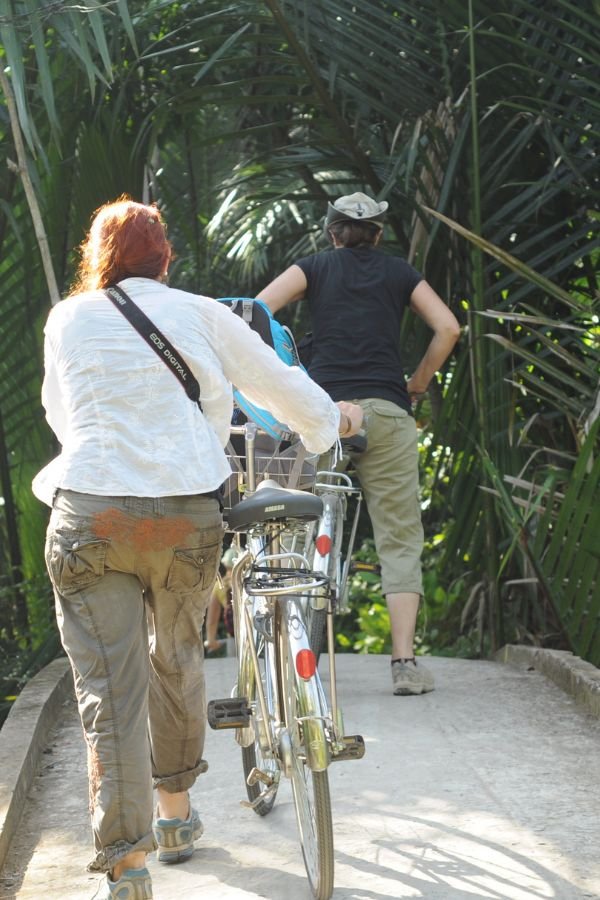
Learning Through Infrastructure, Safety And Community Connection
Students learn how bridges, waterways and rural mobility affect school access, family livelihoods and daily community life.
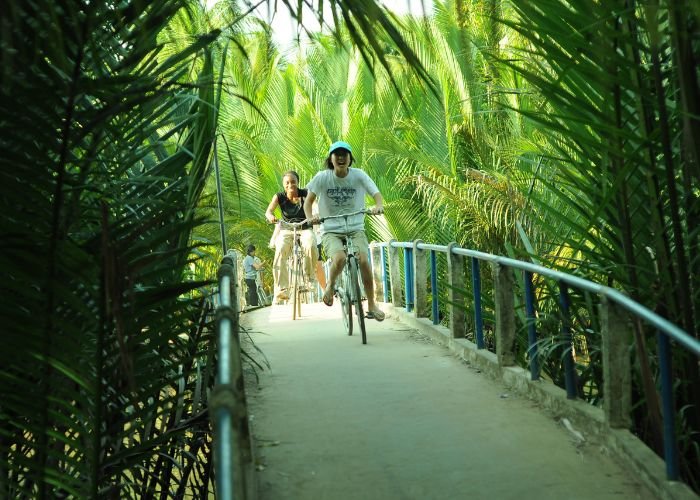
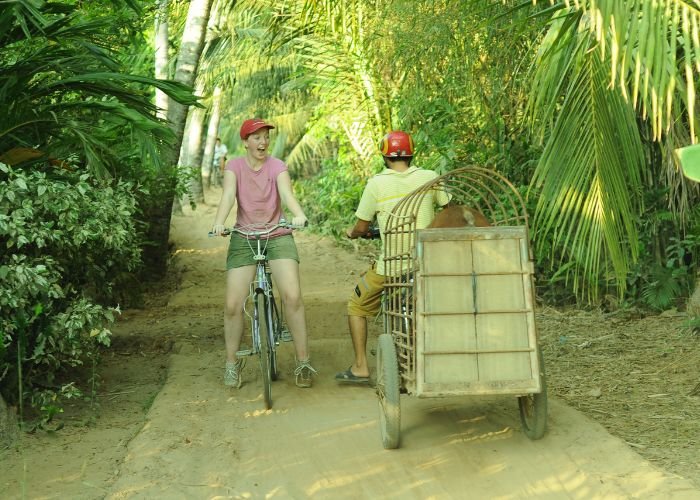
Creating Safer And More Reliable Crossings
The purpose of the Community Service Project Building Bridge is to support the construction of a safe, durable cement bridge that provides long-term access across a local canal.
The completed bridge is designed to support pedestrians, bicycles and motorbikes, helping local residents move more safely and efficiently. It can shorten the route to school, make it easier to transport fruit, rice and household goods, and improve daily access between homes, farms and community services.
The goal is not only to replace a temporary bamboo crossing. The deeper purpose is to help students understand how infrastructure can reduce risk, support education, improve economic activity and strengthen community connection.
Why This Matters
A bridge can transform how a community moves. For local children, a safe cement bridge can make the route to school shorter, easier and less risky.
For families, it can support daily movement between homes, farms, markets and services. For farmers and small producers, it can make the transportation of fruit, rice and goods more efficient.
For visiting students, this becomes a practical lesson in how infrastructure reduces barriers, connects people and improves the rhythm of daily life.
Safe, Supervised And Age-Appropriate Bridge Project Support
Students do not perform structural or hazardous bridge construction. Professional local builders manage all technical work to ensure safety and quality.
Site Preparation
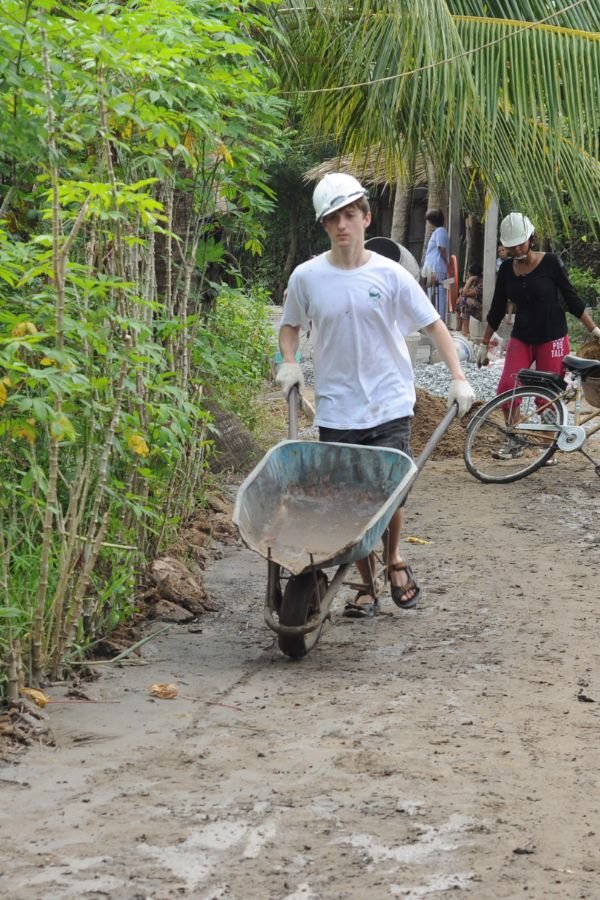
Students may help prepare safe work areas near the bridge site and support access path preparation under supervision.
Material Organization
Students may help organize sand, gravel, cement and light materials safely around the project area.
Community Cooperation
Students may work beside local residents in suitable tasks and learn through shared effort and respectful interaction.
Daily Reflection
Students reflect on infrastructure, waterways, mobility, safety, community development and responsible service.
Connecting Infrastructure With Safety, Education And Opportunity
This project helps students understand how basic infrastructure affects school access, livelihoods, mobility and community resilience.
Infrastructure Awareness
Students learn how a small bridge can make daily movement safer and more reliable for a rural community.
Education Access
Students explore how safe crossings can help children reach school with less risk and greater confidence.
Shared Responsibility
Students observe how community projects require cooperation, planning, timing and collective effort.
Global Citizenship
Students reflect on equity, rural life, climate, infrastructure, privilege and respectful service.
Sample 5 Day Project Structure
The project can be delivered as a focused infrastructure service learning program or combined with a broader educational journey in the Mekong Delta.
Day 1: Arrival And Community Introduction
Students travel to the project location, meet local coordinators, community representatives and builders, then receive a cultural briefing, safety orientation and project introduction.
Day 2: Site Preparation And Material Organization
Students support safe preparation of the bridge area and access paths while learning how reinforcement and concrete structures create stronger crossings.
Day 3: Bridge Construction Support And Rural Life Learning
Professional builders continue the main technical work while students support suitable non-hazardous tasks and observe the preparation of bridge components.
Day 4: Continued Support And Community Reflection
Students continue safe support activities, help with site organization or simple finishing preparation, and reflect on rural infrastructure and community safety.
Day 5: Bridge Opening And Closing Reflection
The project concludes with a simple bridge opening or community sharing moment followed by reflection on access, connectivity, dignity and responsible service.
Who This Project Is Suitable For
- International middle schools
- International high schools
- University service learning groups
- Global citizenship programs
- Community service programs
- Rural development learning programs
- Infrastructure and sustainability programs
- Student leadership groups
Possible Extensions
Schools can extend this project into a broader Mekong Delta educational journey, connecting bridge building with river life, agriculture, waterways and rural community learning.
- Mekong Delta village life and river exploration
- Agricultural learning and local livelihood study
- Waterways, canals and rural mobility learning
- Climate and flood resilience discussions
- Ho Chi Minh City history, museums and urban studies
- Vietnamese culture and language learning
- Student leadership and reflection retreat
A Bridge Can Transform How A Community Moves
For local children, a safe cement bridge can make the route to school shorter, easier and less risky. For families, it can support daily movement between homes, farms, markets and services.
For farmers and small producers, it can make the transportation of fruit, rice and goods more efficient. For the community, the bridge becomes more than infrastructure. It becomes a shared asset that supports safety, access, dignity and connection.
For visiting students, this project offers a powerful learning experience. They begin to understand that infrastructure is not only about construction. It is about reducing barriers, connecting people and improving the rhythm of daily life.
What Educators Say
Reflections from teachers and program leaders from international high schools in the United States.
“This project helped our students understand that a bridge is not just a structure. It connects children to school, families to livelihoods and communities to safer daily movement.”
Olivia Martin
Service Learning Coordinator
Greenfield International High School, California, USA
“What stood out to me was how clearly students could see the importance of safe access. They understood how waterways shape life in the Mekong Delta and why a permanent bridge matters.”
James Peterson
Global Studies Teacher
Willow Creek High School, Oregon, USA
“The bridge project gave our students a powerful lesson in cooperation and community development. Working alongside local residents helped them understand service through humility and shared purpose.”
Hannah Brooks
Director Of Student Programs
Silver Lake Global Academy, Washington, USA
Plan A Bridge Building Service Project In Vietnam
Bring your students to the Mekong Delta for a meaningful service learning journey focused on safe access, infrastructure, rural mobility, community connection and guided reflection.
Contact Us