
Community Service Project School Sanitation
Improving hygiene, health and learning conditions in the Mekong Delta.
The Community Service Project School Sanitation is a public health and service learning program designed for international schools, high schools, universities and educational institutions seeking meaningful community engagement in Vietnam.
Set in rural areas of the Mekong Delta, the project focuses on improving basic sanitation facilities in local kindergartens and primary schools while helping students understand the connection between hygiene, dignity, public health and education.
Understanding Sanitation Challenges In Rural Schools
In several rural communities across the Mekong Delta, small schools continue to face challenges related to basic sanitation infrastructure. Some schools may have old, damaged or insufficient toilet facilities, while others may lack child-friendly handwashing areas or proper hygiene support spaces.
For young children, poor sanitation can affect comfort, confidence and health. When toilets are not clean, safe or easy to use, students may avoid using them during the school day, which can affect concentration, wellbeing and the overall school experience.
For visiting students, this project creates a real-world opportunity to understand WASH principles, which connect water, sanitation and hygiene to healthier communities and better learning conditions.
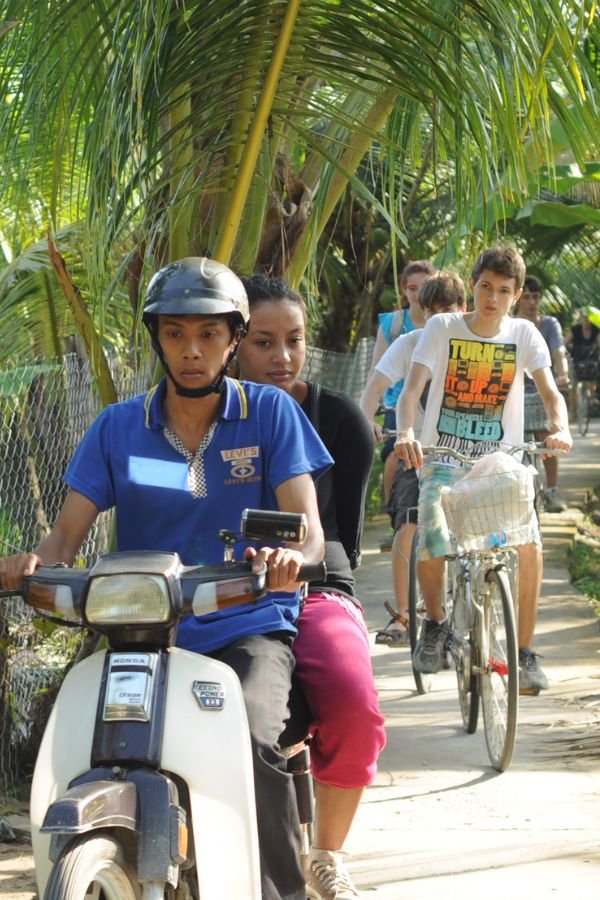
Learning Through WASH, Public Health And School Care
Students learn how safe facilities, handwashing habits and hygiene education support healthier learning environments.
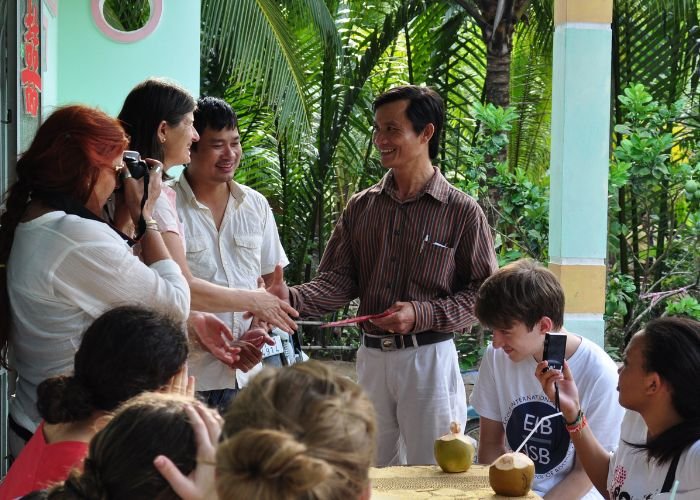
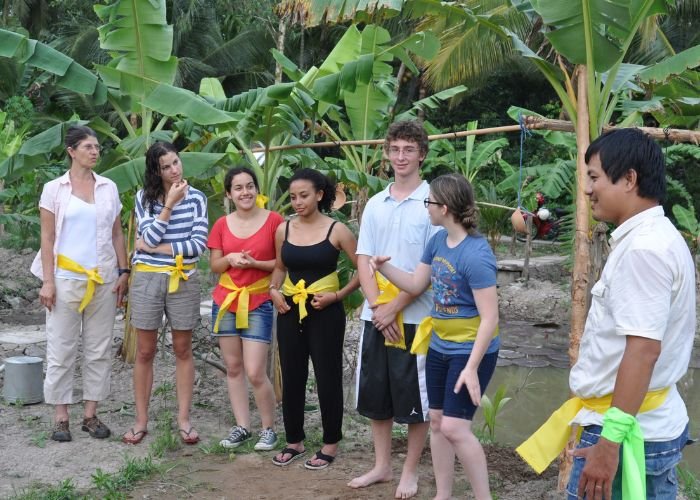
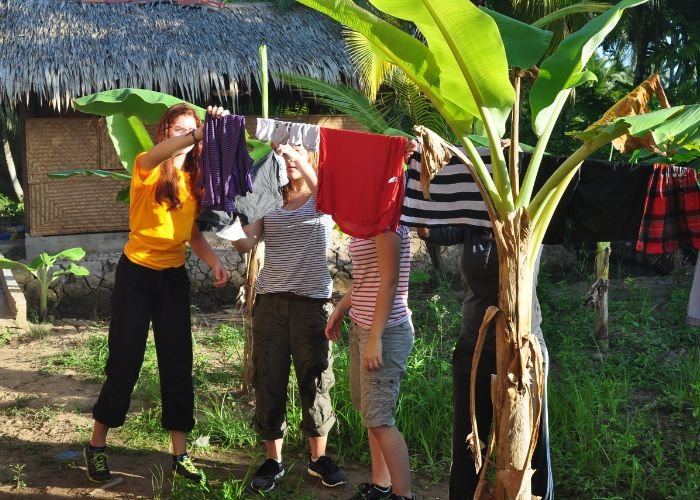
Supporting Healthier And More Dignified Learning Spaces
The purpose of the Community Service Project School Sanitation is to support healthier and more dignified learning spaces by improving school sanitation facilities and promoting hygiene awareness.
Depending on the school’s needs, the project may include restroom improvement, material preparation, non-technical support tasks, hygiene education materials and handwashing awareness activities.
The goal is not only to improve a toilet facility. The deeper purpose is to help students understand how sanitation affects daily school life, public health, student confidence, environmental responsibility and educational access.
Why This Matters
Safe sanitation can change the daily experience of a school. For young students, a clean and child-friendly toilet can improve comfort, reduce health risks and support better hygiene habits.
For teachers, better sanitation facilities help create a healthier and more manageable learning environment. For the school community, the project strengthens awareness of hygiene, clean water and responsible care for shared facilities.
For visiting students, this becomes a grounded lesson in public health, global citizenship, sustainability and ethical service.
Safe, Supervised And Age-Appropriate Sanitation Support
Students do not perform technical construction or repair work. Professional local builders handle all structural tasks while students support safe learning activities.
Site Preparation
Students may help prepare safe work areas around the school site and organize light materials for builders.
Hygiene Awareness
Students may support handwashing education, hygiene posters and simple visual learning materials.
School Interaction
Students may join group-based hygiene games, school displays or supervised learning activities with local students.
Daily Reflection
Students reflect on WASH, public health, clean water, dignity, sustainability and responsible service.
Connecting Sanitation With Health, Education And Sustainability
This project helps students understand why water, sanitation and hygiene are essential to healthy school communities.
WASH Awareness
Students learn how water, sanitation and hygiene are connected to comfort, health and daily school life.
Global Citizenship
Students connect local infrastructure needs with broader global issues such as health, inequality and education access.
Sustainability
Students explore responsible water use, clean school environments and healthier community habits.
Ethical Engagement
Students develop empathy, cultural sensitivity and respect through supervised community interaction.
Sample 5 Day Project Structure
The project can be delivered as a focused school sanitation service learning program or combined with a broader educational journey in the Mekong Delta.
Day 1: Arrival, Orientation And Community Welcome
Students arrive in the Mekong Delta and receive a cultural briefing, safety training and project orientation before learning about the school community and sanitation goals.
Day 2: School Visit And Project Preparation
Students visit the school site, learn about current sanitation conditions and help prepare simple materials, safe work areas and hygiene awareness content.
Day 3: Service Activities And Hygiene Learning
Professional builders continue technical improvement work while students support safe tasks and participate in WASH learning sessions.
Day 4: Handwashing Education And Student Interaction
Students may support handwashing education, poster displays, group games or simple learning activities with local students.
Day 5: Project Handover And Closing Reflection
The project concludes with a simple handover or school sharing moment, followed by reflection on sanitation, public health and sustainability.
Who This Project Is Suitable For
- International middle schools
- International high schools
- University service learning groups
- Global citizenship programs
- Public health learning programs
- Sustainability and WASH education programs
- Community service programs
- School exchange programs
Possible Extensions
Schools can extend this project into a broader Vietnam educational journey, connecting sanitation with culture, water management, climate awareness and community life.
- Mekong Delta cultural immersion
- Homestay or eco-lodge experience
- River life and farming community visits
- Water management and climate awareness learning
- Ho Chi Minh City history and urban studies
- Vietnamese culture and language learning
- Student leadership and reflection retreat
Safe Sanitation Can Change The Daily Experience Of A School
For young students, a clean and child-friendly toilet can improve comfort, reduce health risks and support better hygiene habits. For teachers, better sanitation facilities help create a healthier and more manageable learning environment.
For the school community, the project strengthens awareness of hygiene, clean water and responsible care for shared facilities. Students begin to see that public health is shaped by infrastructure, habits, education and community responsibility.
Visiting students return home with a deeper understanding of WASH, sustainability, cultural respect, ethical service and the connection between health and education.
What Educators Say
Reflections from teachers and program leaders from international high schools in the United States.
“This project helped our students understand public health in a very practical way. They saw how sanitation, handwashing and clean facilities can affect confidence, comfort and learning.”
Rebecca Lawson
Service Learning Coordinator
Oakridge International High School, California, USA
“What I appreciated most was the balance between community contribution and student learning. Our students were never placed in unsafe construction roles, but they were deeply engaged.”
Matthew Green
Global Citizenship Teacher
Riverbend High School, Oregon, USA
“The school sanitation project gave our students a meaningful understanding of how basic infrastructure supports education. Their final reflections showed real growth in empathy and public health thinking.”
Samantha Lee
Director Of Experiential Learning
Westfield Global Academy, Washington, USA
Plan A School Sanitation Service Project In Vietnam
Bring your students to the Mekong Delta for a meaningful service learning journey focused on WASH, public health, school hygiene, sustainability, community connection and guided reflection.
Contact Us