What Students Gain From A Meaningful School Tour In Vietnam
A meaningful school tour should do more than take students to a new country. It should help them grow, think differently, understand people more deeply and connect what they learn in school with the real world. This is why Vietnam School Tours are becoming a valuable choice for international schools, high schools and universities that want travel to become part of education.
Vietnam offers students a powerful learning environment. It is a country of rivers, mountains, cities, villages, farms, schools, markets, cultural traditions and fast social change. When students travel through Vietnam with a clear educational purpose, they do not only see a destination. They experience a living classroom.
A well-designed school tour in Vietnam can help students build empathy, confidence, teamwork, cultural understanding, global awareness and a stronger sense of responsibility. These outcomes stay with students long after the journey ends.
Students Gain A Deeper Understanding Of The World
Many students learn about global issues through textbooks, videos or classroom discussions. They may study sustainability, public health, education access, culture or community development. However, these topics can sometimes feel distant when students only learn about them in theory.
Vietnam School Tours help bring these ideas to life.
When students visit a rural school, they begin to understand how education is connected to facilities, transportation, family income, weather and local resources. When they join a school sanitation project, they see how clean toilets and handwashing areas can affect comfort, health and learning. When they visit a farming community, they understand how nature, climate and livelihoods are connected.
This kind of learning helps students see the world in a more connected way. They begin to understand that real life does not fit neatly into separate school subjects. Geography connects with culture. Public health connects with education. Sustainability connects with farming. Infrastructure connects with opportunity.
A meaningful school tour helps students move from knowing facts to understanding context.
Students Build Empathy Through Human Connection
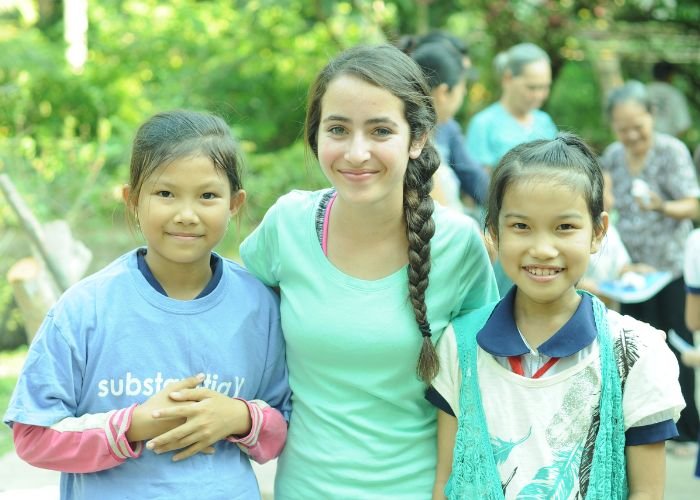
One of the most important benefits of Vietnam School Tours is the development of empathy. Students may come from very different backgrounds, but when they meet local students, teachers, families, farmers or community members, they begin to understand people through real interaction.
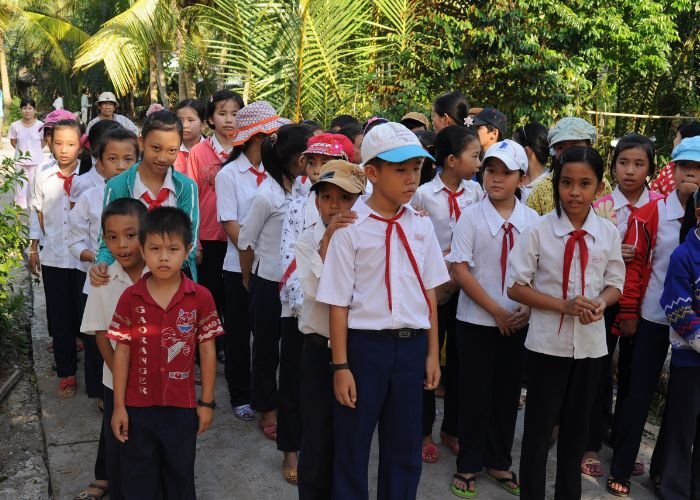
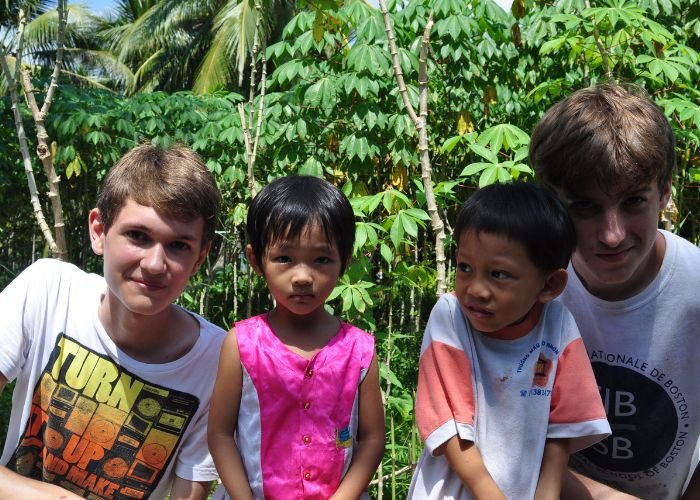
For example, during a local school exchange, students may join games, art activities, English conversation, sports or reading sessions with Vietnamese students. At first, they may feel shy or unsure. But through simple shared activities, they begin to connect.
They may realize that language differences do not prevent friendship. They may see that students in different countries share similar hopes, humor, curiosity and dreams. They may also learn that people can live differently and still share common human values.
Empathy is not created by looking at people from a distance. It grows when students listen, participate and reflect. A good school tour helps students understand local communities with respect, not pity.
This is especially important. Responsible Vietnam School Tours should never teach students to see communities as “poor” or “helpless.” Instead, they should help students see both challenges and strengths. Students learn to appreciate resilience, dignity, creativity and local knowledge.
Students Develop Confidence In New Environments
Travel naturally places students in unfamiliar situations. They may hear a new language, eat new food, meet new people, sleep in a different environment or take part in activities they have never tried before.
When these experiences are guided safely and thoughtfully, they help students build confidence.
A student who is usually quiet in the classroom may become more active during a group activity. A student who feels nervous speaking with strangers may gain confidence through a school exchange. A student who has never traveled to a rural community may learn to adapt, observe and participate respectfully.
Vietnam School Tours can give students many small moments of growth. They may introduce themselves to local students, ask questions during a village visit, help prepare learning materials, present a group reflection or support their classmates during a project.
These moments may seem simple, but they help students become more independent and more comfortable outside their usual environment.
Confidence grows when students realize: “I can handle new situations. I can communicate. I can learn from people who are different from me. I can contribute.”
Students Learn Teamwork And Leadership In Real Settings
Teamwork is often taught in school, but a project-based school tour allows students to practice teamwork in real situations.
During Vietnam School Tours, students may work together to prepare a reading corner, organize a cultural exchange activity, support a hygiene awareness session, create reflection presentations or complete a community-based learning task.
In these activities, teamwork is not only about dividing responsibilities. It requires communication, patience, flexibility and shared purpose.
Students learn that good teamwork means listening to others, helping classmates, respecting local guidance, solving problems and staying responsible even when conditions are unfamiliar.
Leadership also becomes more practical. Students may lead a small group, coordinate an activity, speak during a reflection session or support younger local students during an exchange. They learn that leadership is not about being the loudest person. It is about serving the group, staying calm, taking responsibility and helping others succeed.
These are valuable life skills that students can carry into school, university and future careers.
Students Understand Culture Through Daily Life
Culture is often introduced through famous landmarks, historical sites or traditional performances. These are useful, but they are only one part of cultural understanding.
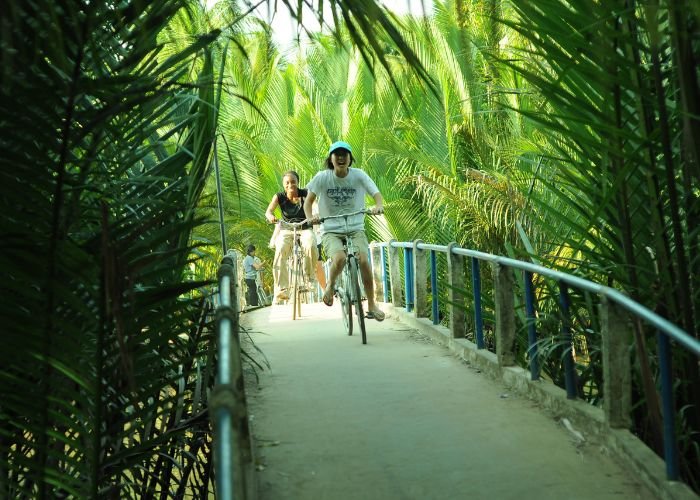
In Vietnam, students can learn culture through daily life. They may visit local markets, join family workshops, learn about rice farming, explore river communities, meet artisans, taste regional food or spend time in rural schools.
Through these experiences, students begin to understand that culture is not only something people perform. It is how people live, work, eat, speak, celebrate, learn and care for one another.
A meaningful school tour helps students move beyond simple observations such as “this is different.” Instead, they begin to ask deeper questions:
Why do people live this way?
What values shape this community?
How does geography affect culture?
How does family life influence education?
What can I learn from this way of life?
These questions help students become more culturally aware and respectful. They also help them reflect on their own culture and assumptions.
Students Learn Responsible Service
Many schools want students to participate in community service during international trips. However, service must be designed carefully. If not, it can easily become charity tourism, where students feel they are “helping” without truly understanding the community.
Responsible Vietnam School Tours focus on service learning, not charity tourism.
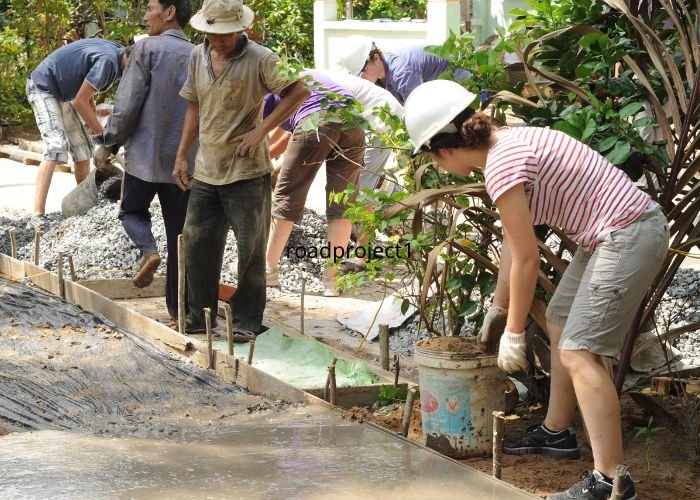
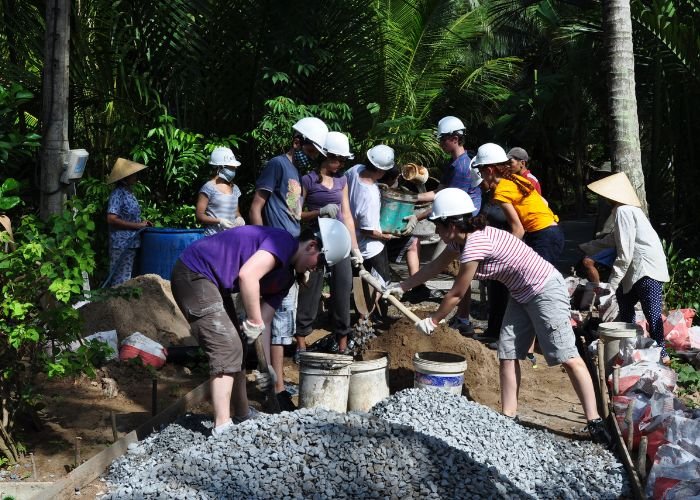
This means students contribute in safe, age-appropriate and respectful ways while learning from the experience. They may support a school library project, help with classroom decoration, join hygiene education activities, prepare learning materials or take part in environmental awareness programs.
Technical work should always be handled by local professionals. Students should not be placed in unsafe construction roles. Their role is to learn, support appropriately, work respectfully and reflect deeply.
Through responsible service learning, students understand that communities are partners, not backdrops. They learn that meaningful service begins with listening, humility and respect.
Students Build Global Citizenship
Global citizenship is not only an idea. It is a way of seeing the world with responsibility, curiosity and care.
Vietnam School Tours help students develop this mindset by exposing them to real questions about education, health, sustainability, culture, environment and inequality.
Students may reflect on why some schools have fewer resources, how climate affects rural life, why sanitation matters for learning, how communities protect traditions, or how tourism can be more responsible.
These questions help students understand that their choices matter. They begin to see themselves as part of a wider world, not separate from it.
A meaningful school tour can help students become more thoughtful and responsible young people. They may return home with greater gratitude, stronger awareness and a clearer desire to contribute positively to their communities.
Students Learn Through Reflection
Experience alone does not automatically create learning. Students need time to process what they have seen, felt and understood.
This is why reflection is an essential part of meaningful Vietnam School Tours.
Reflection can happen through journals, group discussions, guided questions, creative presentations, photo storytelling or teacher-led conversations. It helps students move beyond “What did we do?” to “What did we learn?”
Students may reflect on questions such as:
What surprised me today?
What challenged my assumptions?
What did I learn about local life?
How did this experience connect with my school subjects?
What did I learn about myself?
How can I become a more responsible traveler and global citizen?
Reflection helps students turn travel into education. Without reflection, a school tour may become only a busy itinerary. With reflection, it becomes a meaningful learning journey.
Why These Outcomes Matter For Schools
Schools are increasingly looking for travel programs that support student development, not just tourism. They want journeys that are safe, purposeful and connected to educational goals.
Vietnam School Tours can support many learning outcomes, including cultural understanding, service learning, leadership, teamwork, sustainability, public health, communication and global citizenship.
For teachers, Vietnam provides a rich setting for interdisciplinary learning. A single journey can connect geography, history, social studies, environmental science, language, ethics and personal development.
For students, the experience can be transformative because it combines real places, real people and real reflection.
Conclusion
A meaningful school tour in Vietnam can give students far more than a travel experience. It can help them gain empathy, confidence, teamwork, cultural understanding, responsible service habits and a stronger global mindset.
Vietnam School Tours are powerful because they allow students to learn through life itself. They connect classroom ideas with communities, landscapes, schools, families and real-world challenges.
When designed with purpose, safety and respect, a school tour in Vietnam can become one of the most valuable learning experiences in a student’s education journey.