Service Learning In Vietnam And Why It Matters For Global Citizenship
Education today is no longer only about academic knowledge. Schools are increasingly looking for ways to help students become more thoughtful, empathetic and responsible members of the world. This is why service learning has become an important part of international education, especially when it is connected with meaningful travel.
For schools planning Vietnam School Tours, service learning offers a powerful opportunity for students to learn beyond the classroom. It allows students to engage with real communities, understand local needs, contribute in age-appropriate ways and reflect on larger questions about culture, responsibility, sustainability and global citizenship.
Vietnam is a strong destination for service learning because it offers rich cultural diversity, warm community connection and many real-world learning contexts. Students can learn through rural schools, community projects, environmental challenges, local livelihoods, public health topics, literacy activities and cultural exchange. When designed carefully, service learning in Vietnam can help students understand not only another country, but also their own role in the wider world.
What Is Service Learning?
Service learning is different from simple volunteering. Volunteering usually focuses on helping or completing a task. Service learning combines meaningful contribution with structured education and reflection.
In a good service learning program, students do not simply arrive, help for a few hours and leave. They first learn about the context. They understand why a project matters, who it supports, what challenges the community faces and how their role should be respectful.
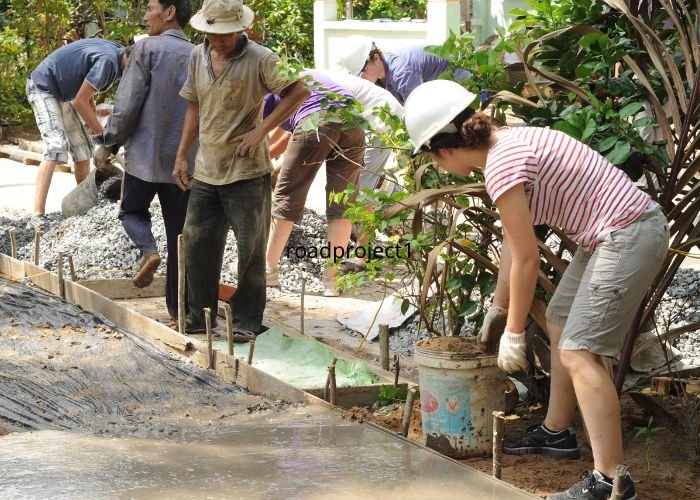
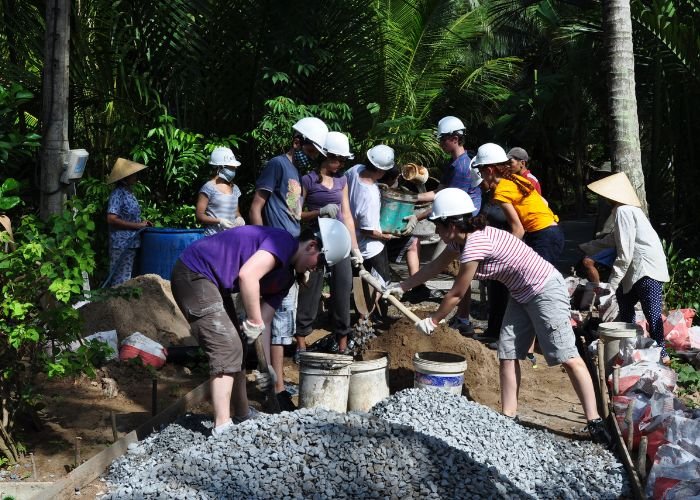
Then, students participate in safe and age-appropriate activities. These may include supporting a school library, preparing reading materials, joining a hygiene awareness activity, helping with classroom decoration, supporting environmental learning or taking part in local school exchange.
Finally, students reflect. They discuss what they learned, what surprised them, what challenged their assumptions and how the experience connects with global citizenship.
This process turns service into education.
Why Service Learning Matters In Vietnam School Tours
Many students travel internationally, but not every trip leads to deeper understanding. A normal tour may give students beautiful photos and interesting memories, but a service learning journey helps them think more deeply about people, place and purpose.
Vietnam School Tours that include service learning can help students connect classroom topics with real life. For example, students may study public health at school, but when they learn about sanitation in a rural school, they begin to see how hygiene, clean water, dignity and education are connected.
They may study literacy, but when they help organize a reading corner or join storytelling activities with local children, they understand how books can support confidence and imagination.
They may study sustainability, but when they visit farming communities or river areas, they see how climate, agriculture, water and livelihoods are part of daily life.
This kind of learning is powerful because students are not only receiving information. They are observing, participating, asking questions and reflecting.
Service Learning Builds Empathy
One of the strongest outcomes of service learning is empathy. Students often hear about global issues from a distance. They may know that some communities face challenges related to education, health, infrastructure or environment, but these ideas can feel abstract.
When students meet local teachers, students, families and community members, the learning becomes human. They begin to understand that every community has its own stories, strengths, hopes and difficulties.
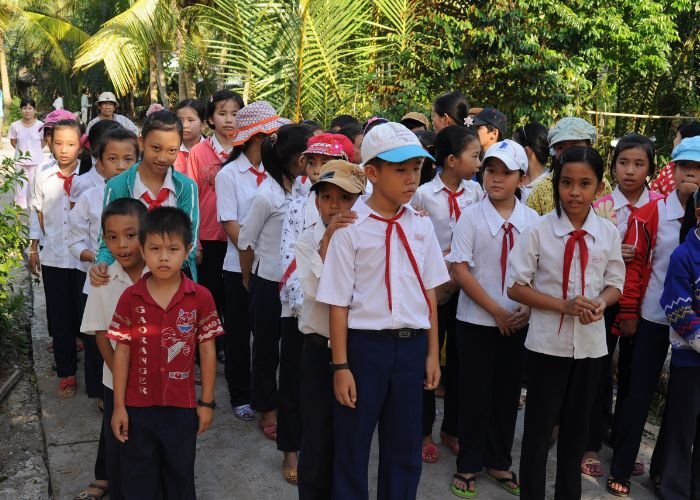
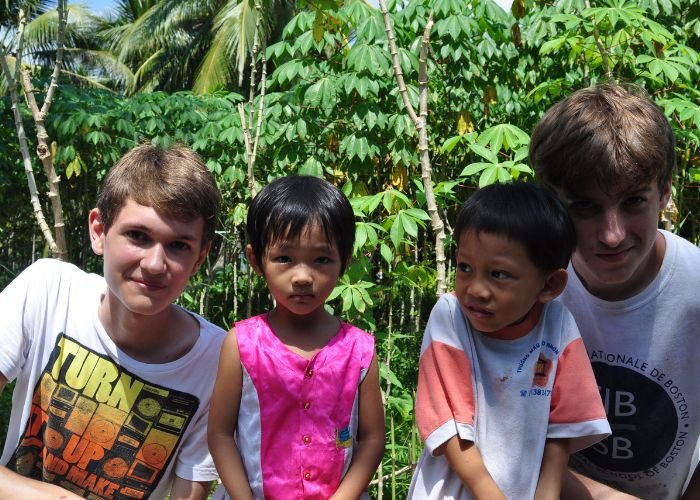
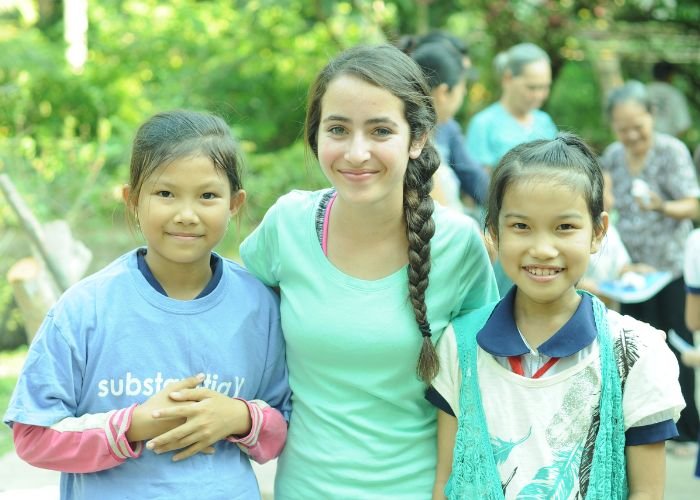
For example, during a local school exchange, international students may join games, art activities, English conversation or reading sessions with Vietnamese students. At first, the two groups may feel shy. But through shared activities, they begin to connect through laughter, curiosity and kindness.
These moments help students understand that people from different cultures may live differently, but they can still share common values and emotions.
However, service learning must be handled carefully. The goal is not to create pity. Students should not see local communities as helpless or passive. Responsible service learning helps students see dignity, resilience, knowledge and community strength.
This is why well-designed Vietnam School Tours should always frame service learning around respect and humility, not charity.
Service Learning Supports Global Citizenship
Global citizenship is a major goal for many schools, but it can be difficult to teach only through classroom discussion. Students may understand the idea of global responsibility, but they need real experiences to feel its meaning.
Service learning gives students that experience.
Through Vietnam School Tours, students may reflect on questions such as:
How does education access affect opportunity?
Why does sanitation matter in schools?
How do communities adapt to environmental challenges?
What does responsible travel mean?
How can we contribute without creating dependency?
What can we learn from local people?
These questions help students understand that global citizenship is not about feeling superior or “helping others” from the outside. It is about listening, learning, respecting, collaborating and acting with responsibility.
Students begin to see that their actions matter. They understand that travel has impact. They learn that meaningful contribution requires humility and partnership.
Students Learn Responsible Service, Not Charity Tourism
One of the most important principles of service learning is avoiding charity tourism. Charity tourism happens when visitors focus mainly on feeling good about helping, while the community becomes a background for photos or short-term emotional experience.
Education Journeys takes a different approach.
In responsible service learning, the community is treated as a partner. Projects should respond to real needs identified with local schools, families, community leaders or partners. Activities should be useful, safe and respectful.
Students should not be placed in unsafe technical roles. If a project involves construction, plumbing, electrical work or structural repairs, those tasks should be handled by local professionals. Students can support through safe preparation, painting, organization, learning materials, awareness activities, exchange programs or reflection work.
The purpose is not for students to “save” a community. The purpose is for students to learn, contribute appropriately and grow as responsible global citizens.
This approach makes Vietnam School Tours more ethical and educational.
Service Learning Develops Practical Skills
Service learning also helps students build practical life skills. These are skills that cannot always be developed fully inside a classroom.
Students learn communication when they interact with people from another culture. They learn teamwork when they work with classmates on a shared task. They learn leadership when they help organize an activity or guide a group reflection. They learn adaptability when plans change or when they face unfamiliar environments.
They also learn observation. A meaningful service learning journey teaches students to slow down and notice details: how people live, how schools operate, how families work, how communities solve problems and how culture shapes daily life.
These skills are valuable for school, university and future careers. More importantly, they help students become more mature and thoughtful people.
Reflection Turns Service Into Learning
Without reflection, service activities can remain shallow. Students may complete a task but not fully understand its meaning. Reflection helps students connect experience with learning.
During Vietnam School Tours, reflection can happen through journals, group discussions, teacher-led questions, student presentations, photo storytelling or creative projects.
Students may reflect on questions such as:
What did I learn today?
What did I notice about the community?
What challenged my assumptions?
How did this project connect with school subjects?
What did I learn about responsible service?
How can I apply this learning in my own life?
Reflection helps students move from action to understanding. It turns a project into personal growth.
Why Vietnam Is A Strong Destination For Service Learning
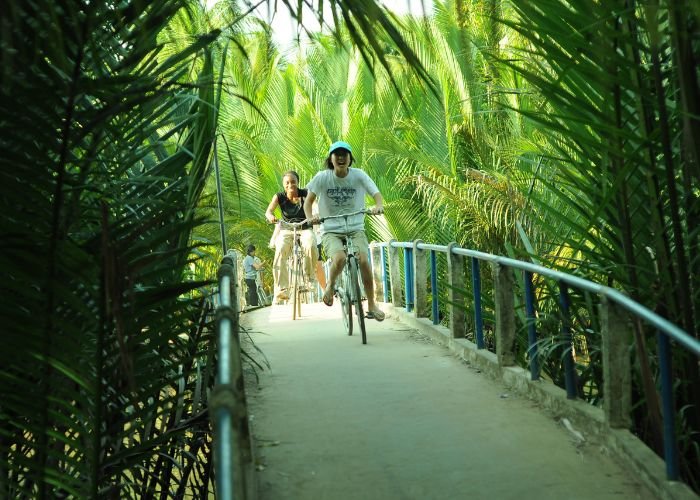
Vietnam offers diverse settings for service learning. Students can explore the Mekong Delta, where river life, farming communities, water management and school projects create powerful learning opportunities. They can visit the Central Highlands, where coffee culture, ethnic diversity, forests and livelihoods open conversations about sustainability and culture. They can travel to Northwest Vietnam, where mountain communities, rural schools and responsible trekking support deep cultural and environmental learning.
Each destination gives students a different perspective. But the real value is not only in the destination. It is in how the journey is designed.
A strong program should include clear learning objectives, safe activities, local partnership, cultural briefing, student reflection and responsible community engagement.
This is what makes Vietnam School Tours meaningful for schools that want travel to become part of education.
Conclusion
Service learning in Vietnam matters because it helps students grow beyond textbooks and sightseeing. It gives them opportunities to understand real communities, contribute respectfully, reflect deeply and develop the mindset of global citizens.
Through well-designed Vietnam School Tours, students can learn about education, health, culture, sustainability, infrastructure, environment and human connection in a way that feels real and lasting.
The goal is not simply to help students see Vietnam. The goal is to help them understand the world more deeply and return home with greater empathy, responsibility and awareness.
When service learning is designed with safety, humility and educational purpose, it becomes one of the most powerful ways to help students learn beyond the classroom.