Why School Tours Should Be More Than Sightseeing
School tours have always been an exciting part of education. Students love the chance to travel, explore new places, take photos and experience something different from their daily classroom routine. However, in today’s world, school tours should offer much more than sightseeing. They should help students think, reflect, connect and grow.
This is why meaningful Vietnam School Tours are increasingly designed around real-world learning, community connection, cultural understanding and student reflection. Vietnam is a rich and powerful learning environment, but the value of a school tour does not come only from where students go. It comes from how they experience the journey, what they learn from it and how deeply they are guided to reflect.
A school tour that only moves students from one attraction to another may be enjoyable, but it may not create lasting learning. A meaningful school tour helps students understand people, places, culture, environment, history and community life in a deeper way. It turns travel into education.
Sightseeing Is Not Enough For Modern Education
Traditional school tours often focus on famous landmarks, museums, monuments and scenic destinations. These places can be valuable, especially when connected to history, geography or culture. But if students only visit, take photos and leave, the learning can remain shallow.
Students may remember that a place was beautiful, busy or interesting. But they may not fully understand why it matters, how local people live there, what challenges exist in the community, or how the experience connects with their own learning.
Modern education asks students to become critical thinkers, responsible citizens, strong communicators and empathetic people. These skills cannot be fully developed through sightseeing alone.
Vietnam School Tours can offer much more when they include project-based learning, local school exchange, community visits, nature-based education and guided reflection. These elements help students move from passive observation to active learning.
Students Need Real-World Context
One of the main reasons school tours should go beyond sightseeing is that students need context. They need to understand the stories behind the places they visit.
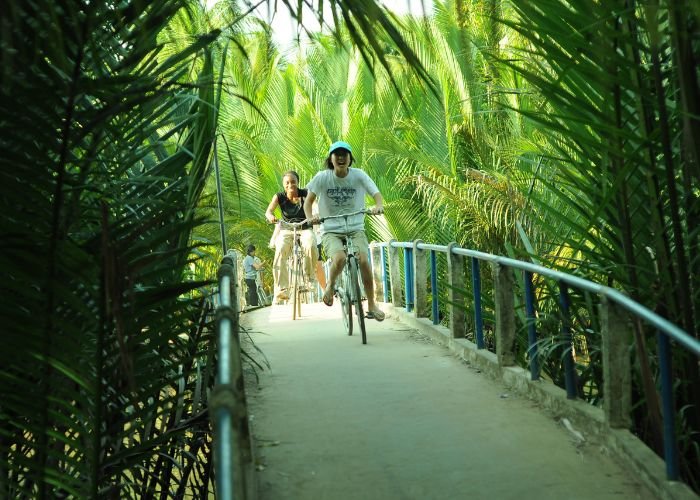
For example, visiting the Mekong Delta should not only be about taking a boat ride. It can become a lesson about river life, agriculture, climate change, water management, local markets, family livelihoods and community resilience.
Visiting the Central Highlands should not only be about seeing coffee farms. It can become a lesson about coffee production, ethnic diversity, forest protection, local livelihoods, land use and sustainability.
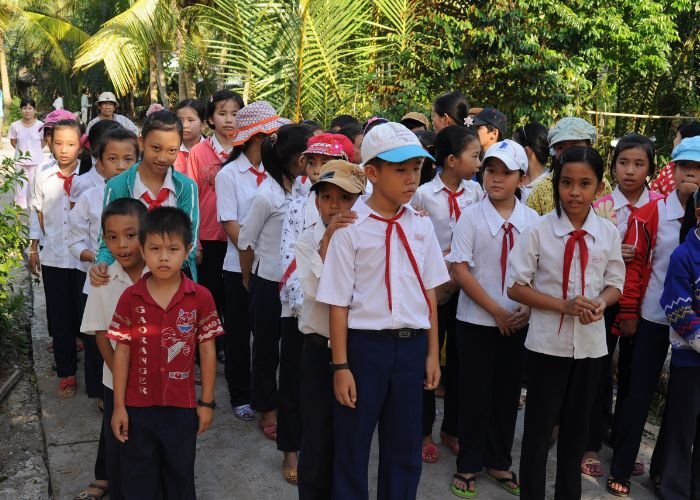
Visiting a rural school should not only be about a quick stop. It can become a meaningful conversation about education access, school facilities, teacher dedication, student motivation and community support.
This is what makes Vietnam School Tours powerful. The destination becomes a living classroom when students are guided to understand the deeper context behind what they see.
Community Connection Creates Deeper Learning
A school tour becomes more meaningful when students meet people. Human connection helps students understand a country in ways that sightseeing cannot.
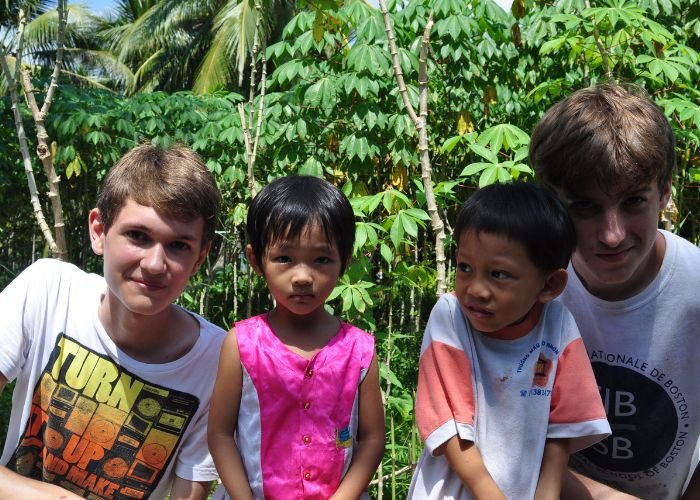
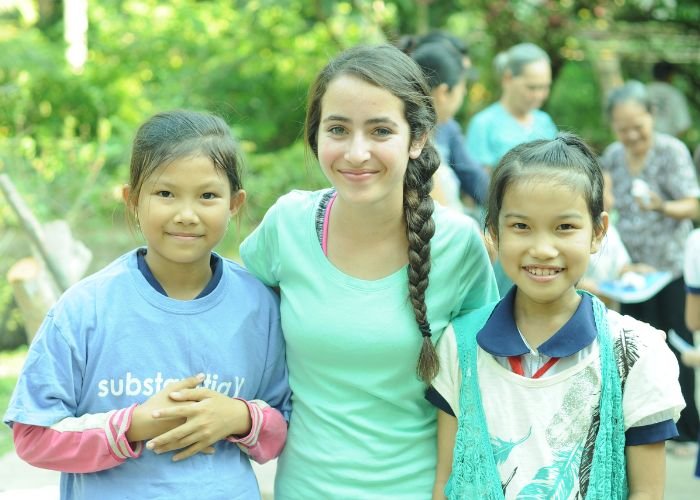
During Vietnam School Tours, students may meet local students, teachers, families, farmers, artisans or community leaders. They may join a school exchange, participate in a reading activity, visit a family workshop, learn from farmers or support an age-appropriate service learning project.
These experiences help students see Vietnam through people, not only through places.
A conversation with a local teacher can help students understand the challenges and hopes of rural education. A simple game with Vietnamese students can help international students realize that friendship can happen even across language barriers. A visit to a farming family can help students see how food, nature and livelihoods are connected.
This kind of learning builds empathy. Students begin to understand that every place has human stories, not just tourist attractions.
Project-Based Learning Makes Travel More Purposeful
Project-based learning is one of the strongest ways to make school tours more educational. Instead of only looking at a community from the outside, students engage with a real theme or need.
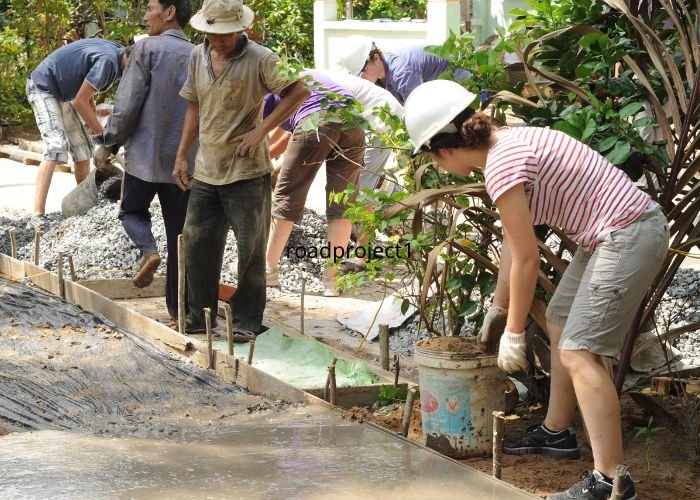
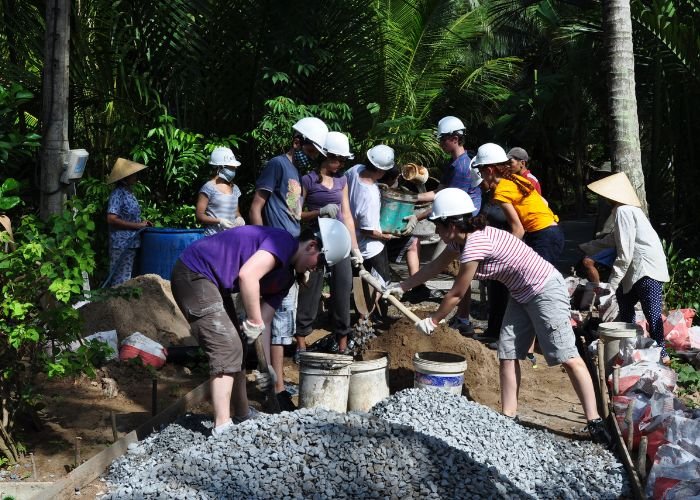
In Vietnam, project-based school tours may include service learning activities such as school sanitation support, library setup, classroom improvement, hygiene awareness, environmental education, reading activities or school exchange programs.
These projects should always be safe, supervised and age-appropriate. Students should not be asked to perform hazardous or technical work. Local professionals should handle construction, plumbing, electrical work or structural repairs. Students can support through preparation, organization, creative learning materials, painting suitable surfaces, cultural exchange or guided reflection.
The purpose is not only to complete a task. The purpose is to help students understand why the project matters.
A school sanitation project can teach students about public health, dignity and learning conditions. A library project can teach them about literacy, confidence and educational opportunity. A classroom renovation project can teach them about motivation, pride and the importance of learning environments.
This makes Vietnam School Tours more purposeful and more memorable.
Culture Should Be Experienced, Not Just Observed
Many school tours include cultural performances or visits to heritage sites. These are useful, but they are only one part of cultural learning. Students also need to experience culture in daily life.
Culture is found in how people eat, work, study, farm, speak, celebrate, travel, trade and care for family. In Vietnam, students can learn culture through local markets, cooking activities, village walks, traditional crafts, school exchanges, family workshops and community storytelling.
When students experience culture directly, they begin to ask deeper questions. Why do people live this way? How does geography influence daily life? What values shape family and community relationships? How are traditions changing in modern Vietnam?
This kind of cultural understanding helps students become more open-minded. They learn that difference is not something to judge quickly. It is something to understand with curiosity and respect.
Reflection Turns A Trip Into Learning
One of the biggest differences between sightseeing and educational travel is reflection. Without reflection, students may enjoy the trip but miss the deeper learning. With reflection, they can process what they have seen and connect it to larger ideas.
Good Vietnam School Tours should include guided reflection throughout the journey. This may happen through journals, group discussions, teacher-led questions, creative presentations, photo storytelling or final sharing sessions.
Students may reflect on questions such as:
What did I learn today?
What surprised me?
What challenged my assumptions?
How did this experience connect with what I study in school?
What did I learn about people, culture and community?
What does responsible travel mean?
What did I learn about myself?
Reflection helps students move from experience to understanding. It turns travel into personal growth.
Students Build Skills Beyond The Classroom
When school tours go beyond sightseeing, students develop important life skills. They learn to communicate with people from different backgrounds. They practice teamwork in real situations. They build confidence by stepping into unfamiliar environments. They learn to observe carefully, ask thoughtful questions and adapt when plans change.
These are skills that students need for university, future careers and life.
For example, during a local school exchange, students may need to introduce themselves, explain a game, work with local students and reflect on the experience. During a community project, they may need to cooperate with classmates, follow safety guidance and contribute to a shared goal. During a cultural visit, they may need to listen respectfully and ask questions with sensitivity.
These moments help students become more mature, flexible and responsible.
Responsible Travel Matters
Another reason school tours should go beyond sightseeing is that travel has impact. Students should learn that when they visit a community, they are not just consumers of experience. They are guests.
Responsible Vietnam School Tours teach students to travel with respect. This includes understanding local customs, asking permission before taking photos, respecting community privacy, avoiding charity-based thinking and recognizing the dignity of the people they meet.
Students should understand that communities are not backgrounds for travel photos. They are living places with their own histories, strengths, challenges and values.
This is especially important in service learning. Students should not be encouraged to see themselves as “saving” others. They should learn to listen, contribute appropriately and reflect with humility.
Responsible travel helps students become better global citizens.
Why Vietnam Is A Strong Destination For Meaningful School Tours
Vietnam is an ideal destination for school tours that go beyond sightseeing because it offers rich learning opportunities across culture, history, community, nature and development.
Students can learn about city life in Ho Chi Minh City, river communities in the Mekong Delta, coffee culture in the Central Highlands, mountain communities in Northwest Vietnam, and historical heritage in Central Vietnam.
But the real value of Vietnam School Tours is not only the diversity of destinations. It is the opportunity to connect those destinations with meaningful educational themes: sustainability, culture, public health, education access, community resilience, leadership and global citizenship.
When designed with care, Vietnam becomes a living classroom.
Conclusion
School tours should be more than sightseeing because students need experiences that help them grow. They need to meet people, understand context, ask questions, participate in meaningful activities and reflect on what they learn.
Vietnam School Tours can provide this kind of powerful educational experience. They can help students build empathy, confidence, teamwork, cultural understanding and global awareness.
A sightseeing trip may show students a destination. A meaningful school tour helps them understand the world.
When schools choose project-based, reflective and community-centered travel, they give students something far more valuable than photos. They give them learning that stays with them long after the journey ends.